 Meriem Taleb, PhD
Oxidative stress is not about avoiding oxygen, free radicals, or oxidation. It is about understanding balance. Every day, your body naturally produces reactive oxygen species and free radicals when you breathe, digest food, move your muscles, and activate your immune system. These molecules are a normal part of human biology. Oxidative stress develops only when the body’s ability to regulate and repair falls behind. Understanding this distinction helps explain why whole foods, minerals, and antioxidant systems matter far more than extreme detoxes or high-dose supplements.
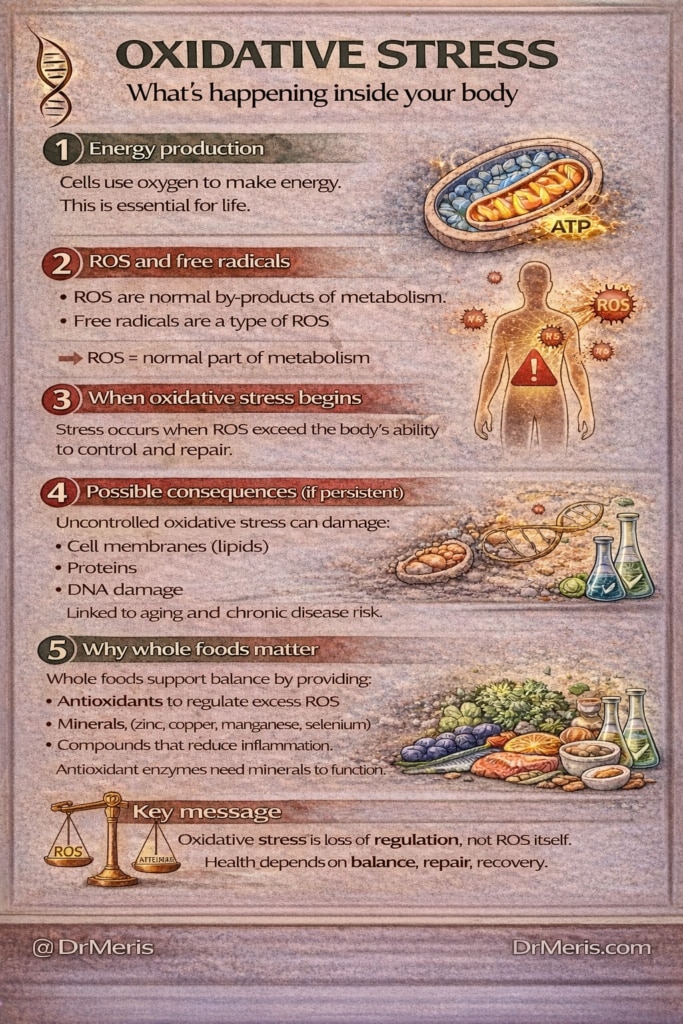
What Is Oxidative Stress?
Oxidative stress occurs when reactive oxygen species, commonly called ROS, exceed the body’s capacity to control them and repair their effects. ROS are oxygen-based molecules produced mainly during normal metabolism, especially during energy production in mitochondria, and during immune responses [1].
Oxidation itself is essential for life. Without it, cells cannot produce energy. Problems arise only when oxidative activity becomes excessive, chronic, and poorly regulated.
Reactive Oxygen Species and Free Radicals Explained Clearly
Reactive oxygen species is a broad category that includes several oxygen-derived molecules. Free radicals are a type of reactive oxygen species, defined by the presence of an unpaired electron that makes them highly reactive.
Not all reactive oxygen species are free radicals. Hydrogen peroxide, for example, is reactive but not a free radical. Both types serve important physiological roles, including immune defense, cellular signaling, and adaptation to stress [2].
Oxidative stress does not mean ROS are present. It means regulation is lost.
Why the Body Produces Free Radicals
Free radicals are not accidental waste products. The body produces them intentionally. Immune cells use free radicals to destroy pathogens. Cells also use ROS as signaling molecules to activate repair pathways and adapt to exercise, fasting, and environmental stress.
Completely eliminating free radicals would impair immune function and disrupt normal cellular communication. Health depends on regulation, not elimination [3].
Antioxidants Regulate Oxidation, They Do Not Eliminate It
A common misconception is that antioxidants remove all reactive oxygen species. In reality, antioxidants regulate oxidative activity and keep it within a functional range.
The most important antioxidants are not vitamins but enzymes produced by the body, including superoxide dismutase, catalase, and glutathione-based systems. These enzymes neutralize excess reactive molecules and support cellular repair [4].
The Role of SOD and Antioxidant Enzymes
Superoxide dismutase, often called SOD, is one of the body’s primary antioxidant enzymes. It neutralizes superoxide, one of the most reactive free radicals generated during normal metabolism.
SOD converts superoxide into less reactive molecules that can then be safely processed by catalase and glutathione systems. This makes SOD a first-line defense against oxidative stress [5].
Why Minerals Matter for Oxidative Balance
Antioxidant enzymes cannot function without minerals. Minerals act as cofactors that enable these enzymes to work.
- Zinc, copper, and manganese are required for SOD activity
- Selenium is required for glutathione-related enzymes
Without sufficient mineral intake, antioxidant defenses become less efficient, even when antioxidant-rich foods are consumed [6]. This is why minerals are often the missing piece in oxidative stress discussions.
Why Whole Foods Matter More Than Supplements
Whole foods support oxidative balance by providing antioxidants, minerals, and bioactive compounds together in forms the body recognizes and uses effectively.
Whole foods help by:
- Supporting antioxidant enzymes
- Reducing chronic inflammation
- Protecting cell membranes and mitochondria
High-dose isolated antioxidant supplements often fail to replicate these benefits and may interfere with beneficial oxidative signaling [7].
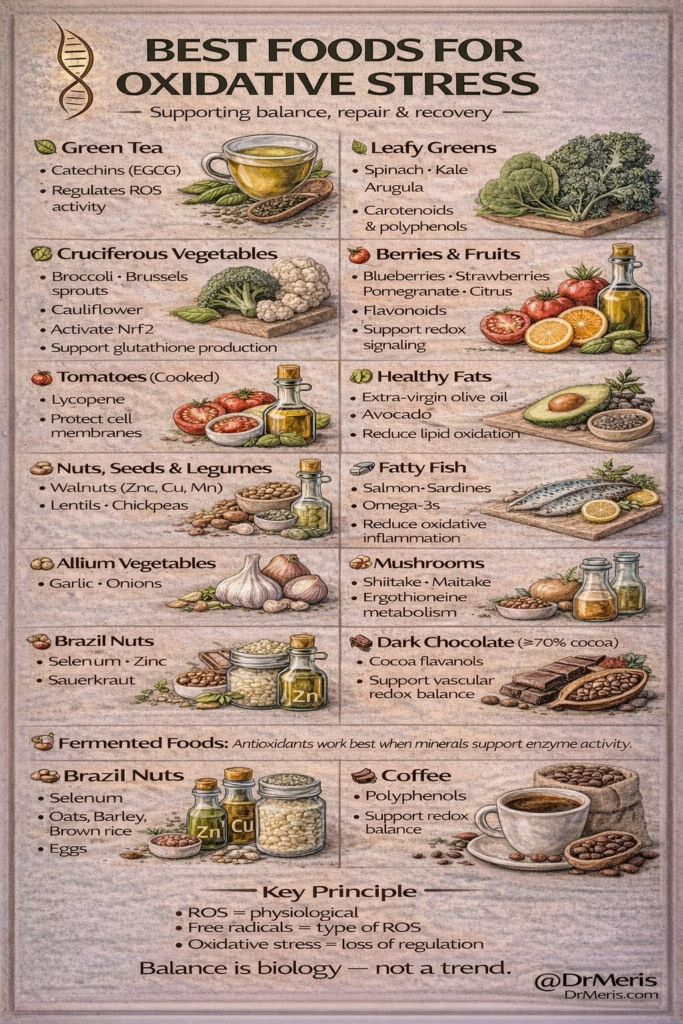
Best Foods for Oxidative Stress and How to Consume Them

Green Tea
Green tea is rich in catechins, especially EGCG, which help regulate ROS activity.
How to consume:
Freshly brewed, 1–3 cups per day. Avoid boiling water directly on leaves and excessive sugar [8].
Coffee
Coffee is one of the largest sources of dietary polyphenols, mainly chlorogenic acids.
How to consume:
1–3 cups per day, preferably black or lightly sweetened. Avoid late-day intake to protect sleep [9].
Leafy Green Vegetables
Spinach, kale, and arugula provide carotenoids, polyphenols, and magnesium.
How to consume:
Daily, raw or lightly cooked. Pair with olive oil to improve absorption.
Learn about the safety of reheating spinach in our guide: Is it Safe to Reheat Spinach?.
Cruciferous Vegetables
Broccoli, Brussels sprouts, and cauliflower activate antioxidant defense pathways.
How to consume:
Lightly steamed or sautéed several times per week. Avoid overcooking [10].
Berries and Fruits
Berries, citrus, and pomegranate provide flavonoids that support redox signaling.
How to consume:
Fresh or frozen, 1–2 servings per day. Avoid fruit juices.
Cooked Tomatoes
Cooked tomatoes provide lycopene that protects cell membranes.
How to consume:
Cooked with olive oil in sauces or stews. Cooking improves absorption [11].
Healthy Fats
Extra-virgin olive oil and avocado protect lipids from oxidation.
How to consume:
Use olive oil daily for low-to-medium heat cooking and dressings.
Fatty Fish
Salmon and sardines provide omega-3 fatty acids.
How to consume:
2–3 times per week, baked or grilled. Avoid deep frying.
Nuts, Seeds, and Legumes
These provide zinc, copper, and manganese to support SOD activity.
How to consume:
A small handful of nuts daily. Rotate types. Soak or cook legumes well [12].
Allium Vegetables
Garlic and onions support glutathione metabolism.
How to consume:
Raw or lightly cooked. Crush garlic and let it rest before cooking.
Spices and Herbs
Turmeric and ginger help modulate inflammatory signaling.
How to consume:
Use regularly in cooking. Pair turmeric with black pepper.
Mushrooms
Shiitake and maitake provide ergothioneine for mitochondrial protection.
How to consume:
Cooked, several times per week [13].
Dark Chocolate
Dark chocolate provides cocoa flavanols that support vascular redox balance.
How to consume:
At least 70 percent cocoa. Small portions, 1–2 squares [14].
Fermented Foods
Yogurt, kefir, and sauerkraut support gut health and inflammation control.
How to consume:
Small portions daily or several times per week.
Whole Grains, Eggs, and Selenium-Rich Foods
Whole grains and eggs support antioxidant enzymes. Brazil nuts are rich in selenium.
How to consume:
Whole grains regularly. Eggs several times per week. Brazil nuts 1–2 per day maximum [6].
Key Takeaways
- Reactive oxygen species are physiological
- Free radicals are a type of reactive oxygen species
- Oxidative stress is a loss of regulation
- Health depends on balance, repair, and recovery
Balance is biology, not a trend.
For more tips on healthy eating and nutrient‑rich foods, visit our Nutrition category: https://drmeris.com/category/nutrition/.
References
[1] Sies H. Oxidative stress: a concept in redox biology and medicine. Redox Biol. 2015;4:180-3.
[2] Halliwell B, Gutteridge JMC. Free radicals in biology and medicine. Oxford University Press; 2015.
[5] McCord JM, Fridovich I. Superoxide dismutase function. J Biol Chem. 1969;244(22):6049–6055.
[8] Khan N, Mukhtar H. Tea polyphenols. Life Sci. 2007;81(7):519–533.
[9] Martini D, et al. Coffee consumption and oxidative stress. Nutrients. 2016;8(8):513.
[11] Rao AV, Rao LG. Lycopene and human health. Pharmacol Res. 2007;55(3):207–216.
Sign Up for Our Email List
Get our latest articles, healthy recipes, tips, and exclusive deals delivered straight to your inbox with our newsletter.
We won't send you spam. Unsubscribe at any time.