 Meriem Taleb, PhD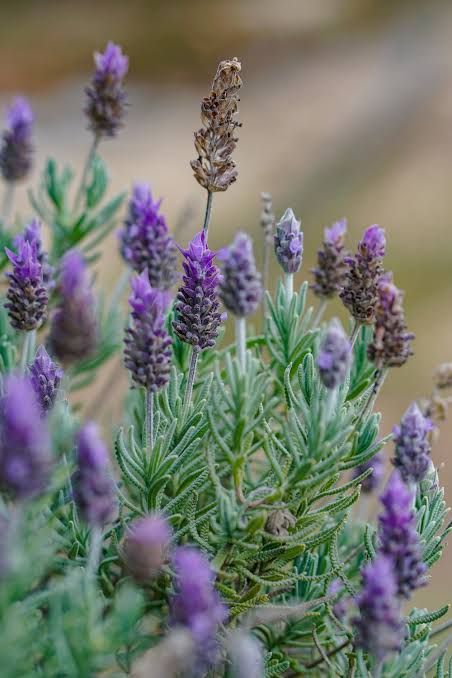
Spanish lavender is one of those plants that first catches your eye, then quietly earns your respect.
Known scientifically as Lavandula stoechas, this Mediterranean shrub is instantly recognizable by its purple flower heads and delicate “rabbit ear” bracts. These blooms are beautiful, but they are also meaningful. They are part of a plant shaped by heat, drought, rocky soils, sunlight, and pollinators.1, 2
Its aromatic leaves, woody stems, drought tolerance, and long flowering season tell the story of a plant built for Mediterranean life. The colorful bracts help attract insects from a distance, while the small flowers provide nectar and pollen.
Dr. Meri’s Note: In many Mediterranean plants, beauty and survival are deeply connected. Color, scent, leaf shape, and flowering time are not random details. They are part of how the plant lives, adapts, and interacts with its environment.
In this article, we will look at what Spanish lavender is, where it grows, how to use it, how it differs from English lavender, and what science really says about its benefits, safety, and limitations.
Related reading on DrMeris.com:
Quick Overview
Spanish lavender (Lavandula stoechas) is a Mediterranean aromatic shrub known for its purple flower heads topped with distinctive “rabbit ear” bracts. It is widely valued for its fragrance, drought tolerance, ornamental beauty, and ability to support pollinators.
Scientifically, Spanish lavender is interesting because its essential oil contains compounds such as camphor, fenchone, 1,8-cineole, and other terpenes. Laboratory studies suggest antioxidant, antimicrobial, anti-inflammatory, and insect-repellent activity, while human clinical evidence is still limited.2, 3, 4
Quick verdict: Spanish lavender is a remarkable Mediterranean plant with ecological, aromatic, and scientific value. Its strongest evidence today supports its role as a drought-tolerant ornamental plant, a pollinator-support plant, and a source of biologically active essential oils. Its traditional uses deserve respect, while strong therapeutic claims still require more human research.
What Is Spanish Lavender?
Spanish lavender (Lavandula stoechas L.) is an evergreen shrub from the mint family, Lamiaceae. It is native to the Mediterranean Basin, where it grows naturally in sunny, dry, and often nutrient-poor soils.1, 2
This plant is much more than decorative. It is a Mediterranean survival specialist.
Its aromatic leaves, woody stems, drought tolerance, and long flowering season reflect a plant shaped by dry summers, rocky soils, and intense sunlight.
What we see as beauty is also biology.
Where Does Spanish Lavender Grow?
Spanish lavender grows naturally across Mediterranean regions, including Spain, Portugal, southern France, Italy, Greece, Türkiye, Morocco, Algeria, and Tunisia.1, 2
It is also cultivated in warm, dry regions outside its native range, including parts of the United States such as California, Arizona, and Texas.
Spanish lavender grows best in full sun, well-drained soil, dry to moderately dry conditions, low humidity, and warm climates.
One of the most common reasons Spanish lavender struggles in gardens is poor drainage. This is not a plant that enjoys sitting in wet soil.
How to Identify Spanish Lavender
Spanish lavender is easy to recognize because of its flower structure. Its flower spikes are topped with showy purple bracts, often called “rabbit ears.” These bracts are not true petals. They are modified leaves that help make the flower more visible to pollinators.
Other identifying features include narrow aromatic leaves, compact woody growth, purple flower heads, a strong herbal fragrance, and a long flowering season in warm climates.
Fun fact: The purple “rabbit ear” bracts are not true petals. They are modified leaves that help make the flower more visible to pollinators from a distance.
Spanish Lavender vs English Lavender
Spanish lavender and English lavender are often confused, but they are not the same plant.
Spanish lavender is Lavandula stoechas. English lavender is Lavandula angustifolia.
English lavender usually has a softer, sweeter fragrance and is more commonly used in culinary products. Spanish lavender has a stronger, more camphor-like scent because its essential oil often contains higher levels of compounds such as camphor and fenchone.5, 6
Dr. Meri’s Evidence Check: Different lavender species produce different essential oils. The name “lavender” is not enough. Species, chemistry, dose, preparation, and method of use all matter.
How to Use Spanish Lavender
Spanish lavender can be used in thoughtful, practical ways when it is appreciated as an aromatic, ornamental, ecological, and traditionally valued plant.
1. Use it in the garden
Plant Spanish lavender in sunny, well-drained areas where it can support bees, butterflies, and other pollinators. It works beautifully in borders, rock gardens, Mediterranean-style gardens, water-wise landscapes, containers, and patios.
2. Use dried flowers for fragrance
Dried flower spikes can be placed in sachets, drawers, wardrobes, or potpourri. The scent is more herbal and camphor-like than English lavender, which gives it a stronger Mediterranean character.
3. Use it in decorative arrangements
Spanish lavender can be used fresh or dried in small bouquets and natural home décor. The “rabbit ear” bracts make it visually distinctive and elegant.
4. Use essential oil carefully
Spanish lavender essential oil may be used in fragrance products, soaps, candles, bath products, or diluted topical formulations. Because it may contain relatively high levels of camphor and fenchone, it should be handled with more caution than English lavender oil.5, 6
5. Add it to a bath
Dried Spanish lavender flowers or a few drops of properly diluted essential oil can be added to a warm bath for their pleasant aroma. Many people enjoy lavender baths as part of a relaxing evening routine. However, evidence for specific health benefits of Spanish lavender baths remains limited, and essential oils should never be added directly to bathwater without first being diluted in a suitable carrier or dispersing agent.5, 6
6. Hang it in the shower
Fresh or dried bundles of Spanish lavender are sometimes tied near the showerhead, where warm steam helps release their herbal fragrance. This creates a gentle aromatic experience and is a popular home wellness practice.
Personally, I like to hang a small bundle of Spanish lavender in the shower, where the warm steam gently releases its herbal fragrance. It is a simple ritual, but it makes an ordinary shower feel calmer and more refreshing.
Dr. Meri’s Practical Tip: Keep the lavender bundle near the steam, not directly under running water. This helps preserve the flowers while still releasing their natural scent.
Safety note: Do not ingest Spanish lavender essential oil. Always dilute essential oils before skin use. Avoid use around young children, pregnancy, breastfeeding, or seizure disorders unless guided by a qualified professional.
If you enjoy evidence-based natural care, you may also like Natural Skincare Recipes.
What Does Science Really Say?
Spanish lavender deserves more attention than it usually receives. Its essential oil and plant extracts contain a complex mixture of natural compounds, including camphor, fenchone, 1,8-cineole, and other terpenes. These compounds help explain why researchers have investigated its antioxidant, antimicrobial, anti-inflammatory, and insect-repellent potential.2, 3, 4
The important point is not to dismiss the plant, but to interpret the evidence correctly. Much of the current research is laboratory-based, which means Spanish lavender has promising biological activity, while more human studies are needed before making strong therapeutic claims.
Evidence-based takeaway: Spanish lavender is not only ornamental. It is chemically rich, ecologically useful, traditionally valued, and scientifically worth studying. The science is promising, but still developing.
For a broader example of how Dr. Meri separates evidence from hype, read Do Probiotics Really Work?.
Potential Benefits
Based on its traditional use, chemistry, and early research, Spanish lavender may be valuable for several practical and scientific purposes.
- Pollinator-friendly gardening
- Drought-tolerant landscaping
- Natural fragrance products
- Cosmetic formulations
- Botanical insect-repellent research
- Mediterranean biodiversity gardens
- Educational gardens that teach plant adaptation and ecology
Its strongest practical value today is ecological, aromatic, ornamental, and botanical. Its traditional uses are also part of its cultural importance, especially in Mediterranean regions.
For more careful discussions of natural health claims, explore the Natural Remedies section.
How to Grow Spanish Lavender
Spanish lavender is not difficult to grow, but it is particular. It does not need rich, wet soil or constant attention. It grows best when we respect what its Mediterranean biology was built for: sun, drainage, airflow, and restraint.
Quick growing rule: If you want Spanish lavender to thrive, think sunny, dry, and well-drained rather than fertile, moist, and heavily pampered.
Light
Spanish lavender grows best in full sun. Aim for at least 6 hours of direct sunlight per day. In cooler climates, more sun usually means stronger growth and better flowering.
Soil
The soil must drain well. Sandy, rocky, or gravelly soil is usually better than heavy clay. If your soil holds water after rain, improve drainage or grow Spanish lavender in a raised bed or container.
Water
Water regularly after planting until the roots are established. After that, water sparingly. Overwatering is one of the fastest ways to damage lavender because wet roots can lead to root rot.
Humidity and Airflow
Spanish lavender prefers dry air and good airflow. In humid climates, avoid crowding plants together. Space them well so moisture does not sit around the leaves and stems.
Pruning
Prune lightly after flowering to keep the plant compact and encourage new growth. Avoid cutting deeply into old woody stems, because lavender may not regrow well from old wood.
Growing in Containers
Spanish lavender can grow well in pots if drainage is excellent. Use a container with drainage holes, avoid letting the pot sit in water, and choose a gritty, well-draining potting mix.
Common Growing Mistakes
- Planting it in heavy, wet soil
- Watering too often after establishment
- Growing it in too much shade
- Using too much fertilizer
- Cutting back into old woody stems
Dr. Meri’s Plant Logic: Spanish lavender is not a thirsty plant being neglected. It is a drought-adapted plant that can suffer when we treat it like a moisture-loving garden flower.
Safety: Natural Does Not Mean Risk-Free
Spanish lavender is generally safe as an ornamental plant.
The essential oil, however, deserves careful handling because it is concentrated and chemically active.
Spanish lavender oil should not be ingested unless supervised by a qualified healthcare professional. It should always be diluted before skin use, and people with sensitive skin should do a patch test first.
Because Spanish lavender oil may contain relatively high levels of camphor and fenchone, extra caution is needed for young children, pregnant or breastfeeding women, and people with epilepsy or seizure disorders.5, 6
Natural products can still be powerful. That is exactly why safety matters.
Frequently Asked Questions
Is Spanish lavender the same as English lavender?
No. Spanish lavender is Lavandula stoechas, while English lavender is Lavandula angustifolia. They differ in appearance, fragrance, chemistry, and common uses.
Can Spanish lavender be used for cooking?
Spanish lavender is not commonly used for culinary purposes. English lavender is generally preferred for food and tea because it has a softer flavor and lower camphor content.
Does Spanish lavender attract bees?
Yes. Spanish lavender attracts bees, butterflies, and other pollinators, especially during its flowering season.
Can Spanish lavender survive drought?
Yes. Once established, Spanish lavender is drought-tolerant and well adapted to dry Mediterranean climates.
Is Spanish lavender essential oil safe?
It can be used carefully in appropriate diluted preparations, but it should not be ingested. Because it may contain relatively high levels of camphor and fenchone, extra caution is needed for children, pregnancy, breastfeeding, and seizure disorders.
Key Takeaways
- Spanish lavender (Lavandula stoechas) is a Mediterranean plant adapted to heat, drought, sunlight, and poor soils.
- Its “rabbit ear” bracts are beautiful and functional because they help attract pollinators.
- It supports bees and butterflies, making it useful for biodiversity-friendly gardens.
- Its essential oil is chemically different from English lavender oil.
- Spanish lavender is valuable as an ornamental, aromatic, ecological, and traditionally respected plant.
- Scientific studies show promising biological activity, while stronger human clinical evidence is still needed.
Final Thought
Spanish lavender reminds us that plants do not evolve beauty for humans alone.
What we call beautiful is often a visible sign of adaptation: attracting pollinators, surviving drought, resisting stress, and thriving where other plants struggle.
That is what makes Lavandula stoechas so fascinating.
Spanish lavender is resilience in bloom: beautiful, useful, and scientifically worth studying.
References
- Upson T, Andrews S. The Genus Lavandula. Royal Botanic Gardens, Kew; 2004.
- Domingues J, Delgado F, Gonçalves JC, Zuzarte M, Duarte AP. Mediterranean lavenders from section Stoechas: an undervalued source of secondary metabolites with pharmacological potential. Metabolites. 2023;13(3):337. doi:10.3390/metabo13030337 | Crossref
- Radi M, Chraibi M, El Amrani A, et al. Comparative study of the chemical composition, antioxidant and antimicrobial activities of two Moroccan lavender species. Frontiers in Chemistry. 2024;12:1353385. doi:10.3389/fchem.2024.1353385 | Crossref
- Aabouch F, Annemer S, Satrani B, et al. Assessing the optimal antibacterial action of Lavandula stoechas L., Thymus zygis L., and Eucalyptus camaldulensis Dehnh essential oils. Life. 2024;14(11):1424. doi:10.3390/life14111424 | Crossref
- Lis-Balchin M, ed. Lavender: The Genus Lavandula. CRC Press; 2002. doi:10.1201/9780203216521
- Dob T, Dahmane D, Agli M, Chelghoum C. Essential oil composition of Lavandula stoechas from Algeria. Pharmaceutical Biology. 2006;44(1):60-64. doi:10.1080/13880200500496421 | Crossref
Disclaimer
This article is for educational purposes only and does not replace medical advice. Do not ingest essential oils or use herbal products for medical purposes without guidance from a qualified healthcare professional.
Sign Up for Our Email List
Get our latest articles, healthy recipes, tips, and exclusive deals delivered straight to your inbox with our newsletter.
We won't send you spam. Unsubscribe at any time.