 Meriem Taleb, PhD
Natural vitamin C masks have become a ritual in modern skincare, celebrated for their simplicity and connection to nature. From freshly squeezed citrus to antioxidant-rich fruits like kiwi and berries, these formulations promise brighter, healthier-looking skin with minimal effort.
Yet behind this natural appeal lies a more nuanced reality. The science of vitamin C is precise: its effectiveness depends on formulation, stability, concentration, and pH1. While professionally developed products are engineered to meet these conditions, homemade masks exist in a more delicate space.
This does not make them ineffective. Rather, it redefines their role. Natural fruit-based masks may offer hydration, mild exfoliation, and a temporary brightening effect, but they are not a reliable way to deliver active vitamin C into the skin. When approached with realistic expectations, they can complement a thoughtful skincare routine grounded in both science and simplicity2.
In this article I provide an honest review of natural vitamin C masks based on dermatological evidence and scientific studies.
Mechanisms and Biological Effects of Vitamin C in Skin
Collagen synthesis
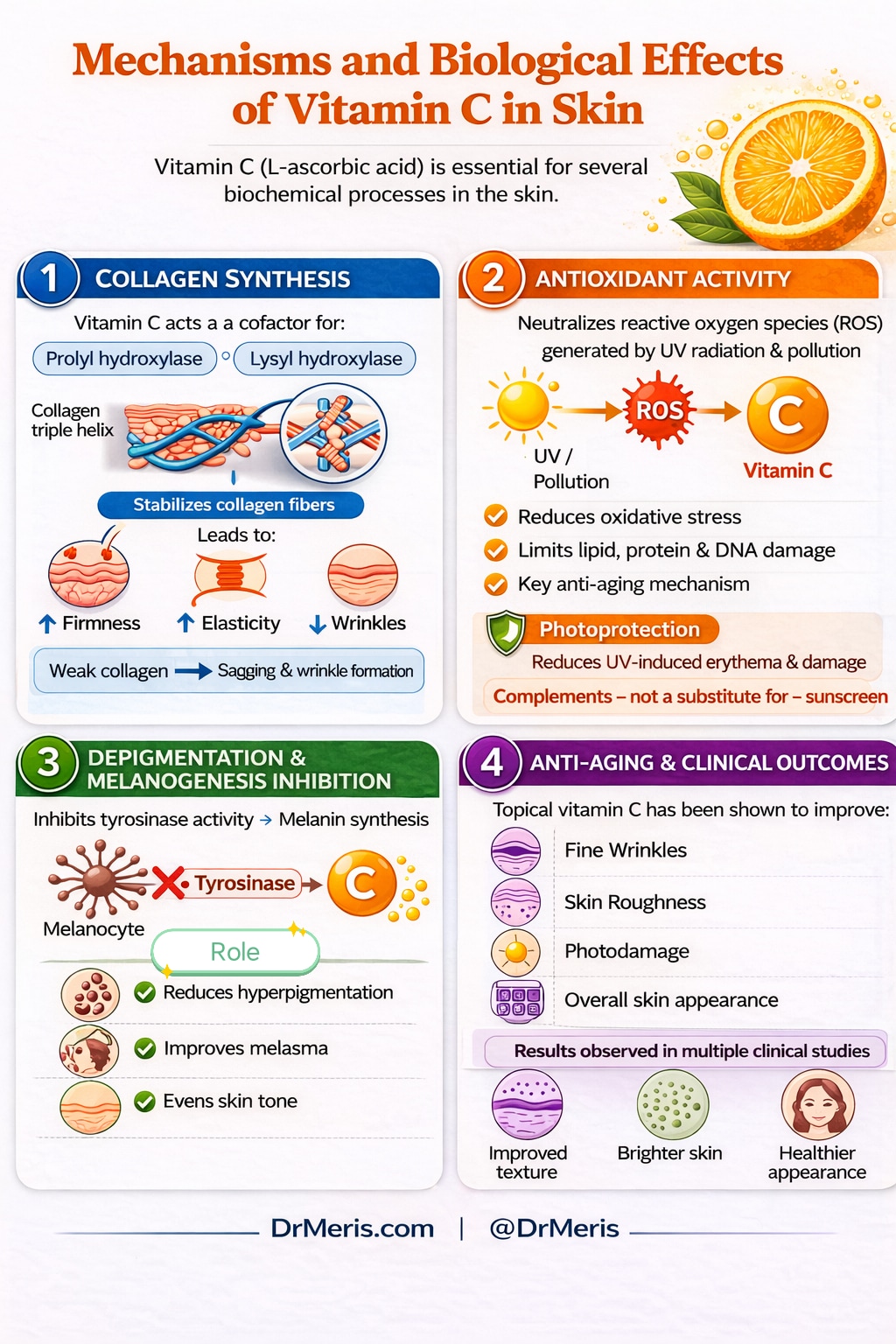
Vitamin C functions as a cofactor for prolyl hydroxylase and lysyl hydroxylase, enzymes responsible for stabilizing collagen triple helices. Without adequate vitamin C, collagen fibers become structurally weak and less resistant to degradation3.
Clinically, this translates into improved skin firmness, elasticity, and reduction of wrinkle formation.
Antioxidant activity and oxidative stress modulation
Vitamin C neutralizes reactive oxygen species (ROS) generated by ultraviolet radiation and environmental pollutants. These ROS contribute to lipid peroxidation, protein oxidation, and DNA damage4.
Topical vitamin C has been shown to reduce oxidative stress markers and limit UV-induced cellular damage5. This mechanism is central to its anti-aging properties.
For a detailed discussion of oxidative mechanisms, refer to:
Oxidative Stress and Skin Aging
Photoprotection
Vitamin C contributes to photoprotection by reducing UV-induced erythema and oxidative damage, although it does not replace sunscreen5. Its role is complementary, enhancing the skin’s antioxidant defense system.
Depigmentation and melanogenesis inhibition
Vitamin C inhibits tyrosinase activity, thereby reducing melanin synthesis. This contributes to improvement in:
- hyperpigmentation
- melasma
- uneven skin tone2
Anti-aging and clinical outcomes
Clinical studies have demonstrated improvements in fine wrinkles, skin roughness, and photodamage following topical vitamin C treatment6.
Skin Absorption and Limitations of Natural Masks
The skin barrier, particularly the stratum corneum, limits penetration of hydrophilic molecules such as vitamin C.
Efficient absorption requires:
- pH below approximately 3.5
- concentration between 10% and 20%
- chemical stability of the active compound
Homemade masks generally:
- contain low concentrations of vitamin C
- undergo rapid oxidation upon exposure to air
- lack controlled pH
Consequently, vitamin C delivery from natural masks is likely limited and inconsistent. Their effects are primarily limited to:
- surface hydration
- mild exfoliation through organic acids
- temporary enhancement of skin brightness
Comparing DIY Masks, Topical Vitamin C Products, and Dietary Vitamin C
Comparison of vitamin C delivery modalities
| Source | Concentration | Stability | Penetration depth | Biological impact |
|---|---|---|---|---|
| Natural masks | Variable and usually poorly standardized | Very low | Superficial | Hydration, mild exfoliation |
| Vitamin C serums | High (10–20%) | High (stabilized) | Dermal penetration | Collagen synthesis, anti-aging |
| Diet | Variable (50–200 mg/100 g foods) | Decreases with storage and heat | Systemic distribution | Essential for long-term skin health |
Interpretation
Properly formulated topical vitamin C products provide the most reliable direct skin effects, while diet supports overall vitamin C status and long-term skin health1, 6. Dietary vitamin C supports systemic physiology and collagen production4. DIY fruit masks may be used as occasional cosmetic treatments, but they should not be presented as evidence-based treatment equivalents to stabilized topical vitamin C products.
Vitamin C Content in Foods
Vitamin C concentration (per 100 g)
| Food | Vitamin C (mg) | % Daily Intake (90 mg) |
|---|---|---|
| Guava | 228 | 253% |
| Red bell pepper | 128 | 142% |
| Kiwi | 92.7 | 103% |
| Broccoli | 89.2 | 99% |
| Papaya | 60.9 | 68% |
| Strawberries | 58.8 | 65% |
| Orange | 53.2 | 59% |
| Lemon | 53.0 | 59% |
| Pineapple | 47.8 | 53% |
| Spinach | 28.1 | 31% |
These data demonstrate that several foods, particularly guava and red bell pepper, provide higher vitamin C levels than citrus fruits.
Natural Vitamin C Face Mask Recipes: Preparation, Benefits, and Frequency
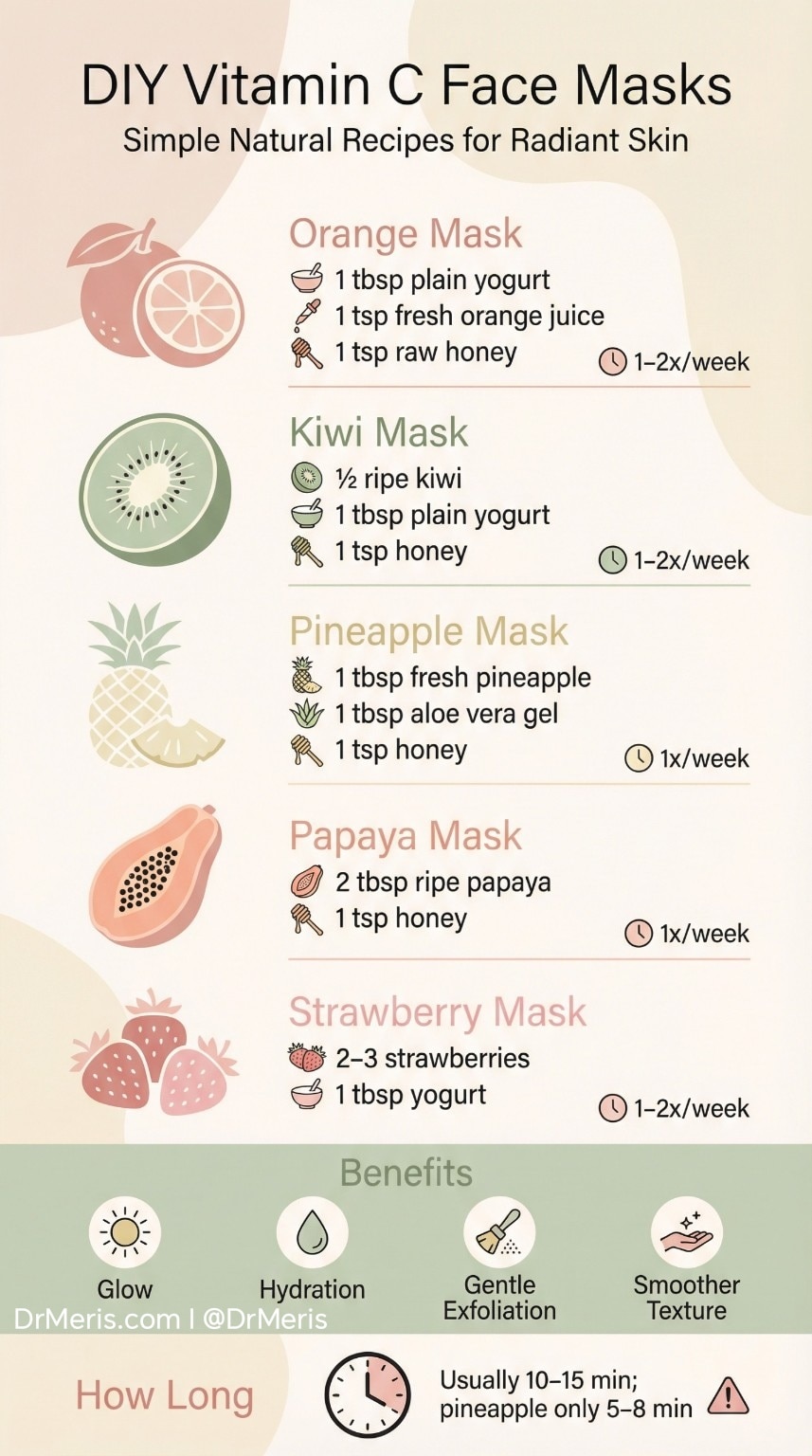
Natural vitamin C masks are best understood as supportive skincare treatments that improve hydration, radiance, and mild exfoliation. Below are detailed formulations with clear instructions and realistic benefits.
1. Orange, Yogurt, and Honey Mask
Ingredients
- 1 tablespoon plain yogurt (unsweetened)
- 1 teaspoon freshly squeezed orange juice
- 1 teaspoon raw honey
Preparation
Mix all ingredients thoroughly in a clean bowl until a smooth, uniform texture is obtained. The mixture should be creamy, not watery.
How to Apply
Apply to clean skin using clean fingers or a soft brush. Spread evenly across the face, avoiding the eye area. Leave on for 10–15 minutes, then rinse with lukewarm water and gently pat dry.
Benefits
- Lactic acid (from yogurt) for gentle exfoliation
- Humectant effect (from honey) to retain moisture
- Mild antioxidant activity (from orange juice)
The primary effect is improved skin smoothness and radiance, rather than deep vitamin C delivery.
Frequency
Use 1–2 times per week. Overuse may disrupt the skin barrier due to mild acidity.
2. Kiwi and Yogurt Antioxidant Mask
Ingredients
- ½ ripe kiwi (mashed)
- 1 tablespoon plain yogurt
- 1 teaspoon honey
Preparation
Mash the kiwi into a smooth paste and mix with yogurt and honey until well combined.
How to Apply
Apply a thin layer to clean skin. Leave for 10 minutes, then rinse thoroughly with lukewarm water.
Benefits
- improved skin brightness
- mild antioxidant protection
- refreshed skin appearance
Yogurt enhances exfoliation, while honey improves hydration.
Frequency
Use once or twice weekly depending on skin tolerance.
3. Pineapple, Aloe Vera, and Honey Mask
Ingredients
- 1 tablespoon fresh pineapple, finely mashed
- 1 tablespoon fresh aloe vera gel
- 1 teaspoon honey
Preparation
Mash the pineapple very well, then mix with aloe vera gel and honey until smooth.
How to Apply
Apply a thin layer to clean skin, avoiding the eye area. Leave on for 5–8 minutes only, then rinse with lukewarm water and pat dry.
Benefits
- pineapple provides a natural source of vitamin C
- aloe vera helps soothe the skin
- honey helps retain moisture
- pineapple may give mild surface exfoliation and a fresher-looking complexion
Frequency
- once weekly
- for sensitive skin, patch test first and use less often
4. Papaya and Honey Enzyme Mask
Ingredients
- 2 tablespoons ripe papaya (mashed)
- 1 teaspoon honey
Preparation
Mash papaya into a smooth paste and mix with honey.
How to Apply
Apply evenly and leave for 10–15 minutes, then rinse.
Benefits
- promotes gentle enzymatic exfoliation
- improves skin texture
- enhances brightness
This mask is especially useful for dull or uneven skin.
Frequency
Use once weekly.
5. Strawberry and Yogurt Brightening Mask
Ingredients
- 2–3 fresh strawberries (crushed)
- 1 tablespoon yogurt
Preparation
Crush strawberries and mix with yogurt until smooth.
How to Apply
Apply evenly and leave for 10 minutes, then rinse.
Benefits
- gently exfoliate
- improve skin glow
- reduce dullness
Frequency
Use 1–2 times per week.
General Application Guidelines
For all masks, proper application technique is important:
Skin Preparation
Cleanse the face thoroughly to remove oil, sunscreen, and impurities. This improves contact between the mask and the skin surface.
Application
Apply evenly without rubbing aggressively. Avoid the eye area.
Duration
Most natural masks should remain on the skin for 10–15 minutes. Longer application does not improve effectiveness and may increase irritation.
Aftercare
Rinse with lukewarm water and apply a moisturizer. If acidic ingredients were used, apply sunscreen during the day.
How Often Should You Use Natural Masks?
Conservative practical frequency suggestions
| Skin Type | Recommended Frequency |
|---|---|
| Normal skin | 1–2 times per week |
| Oily skin | 2–3 times per week |
| Dry skin | once per week |
| Sensitive skin | every 10–14 days |
These are practical suggestions, not firm clinical rules. Stop use if irritation occurs. Overuse may lead to irritation or barrier disruption.
Vitamin C Skincare Products: Serums, Creams, Cleansers, and Supplements
Vitamin C can be delivered to the body and skin through topical products and dietary intake. Each method has different mechanisms, effectiveness, and proper usage.
Vitamin C Serums
Well-formulated topical vitamin C products, especially properly stabilized L-ascorbic acid formulations, have the strongest evidence for direct skin effects.
Typical Characteristics
- Concentration: 10–20% L-ascorbic acid
- pH: 3–3.5 (acidic for penetration)
- Often combined with:
- vitamin E
- ferulic acid (to increase stability)
Benefits
- stimulates collagen production
- reduces fine lines and wrinkles
- brightens skin tone
- protects against oxidative stress1, 4
How to Use
- apply in the morning on clean, dry skin
- use 2–4 drops for the entire face
- follow with moisturizer
- always apply sunscreen after
Frequency
once daily (morning). Beginners may start every other day.
Vitamin C Creams
Vitamin C creams may be more comfortable for some skin types, but stability depends on the specific derivative and formulation.
Characteristics
- lower concentration (usually 2–10%)
- often contain vitamin C derivatives (more stable)
Benefits
- hydration
- mild brightening
- support skin barrier
How to Use
apply after serum or alone; suitable for morning or evening.
Best For
- dry or sensitive skin
- beginners
Vitamin C Cleansers
Vitamin C cleansers are not a primary treatment, because they are rinsed off quickly.
Benefits
- mild antioxidant exposure
- skin refreshing effect
- gentle brightening over time
Limitation
Short contact time means minimal absorption.
How to Use
use once daily (morning or evening), massage gently for 30–60 seconds, then rinse thoroughly.
How to Combine Vitamin C Products
A simple routine:
Morning routine
- Cleanser
- Vitamin C serum
- Moisturizer
- Sunscreen
Evening routine
- Cleanser
- Moisturizer or treatment (retinol, etc.)
Vitamin C is generally not used at the same time as strong exfoliating acids unless the skin is tolerant.
Topical product note: Vitamin C serums and creams differ widely in concentration, formulation, and tolerability. A lower frequency of application is often more appropriate when first starting, particularly for sensitive or reactive skin.
Vitamin C Supplements
Vitamin C can also be taken orally, which supports skin from within.
Daily Recommended Intake
| Group | Recommended Intake |
|---|---|
| Adult women | 75 mg/day |
| Adult men | 90 mg/day |
| Smokers | +35 mg/day |
(Values based on international nutritional guidelines)
Optimal Intake for Skin Support
- 100–200 mg/day (adequate support)
- up to 500 mg/day (commonly used supplementation)
Higher doses are usually unnecessary because excess vitamin C is excreted.
Benefits of Supplementation
- supports collagen synthesis
- enhances antioxidant defense
- contributes to wound healing
- works synergistically with vitamin E4
Important Notes
- vitamin C is water-soluble
- High supplemental doses can cause gastrointestinal discomfort in some people; the adult tolerable upper intake level is 2000 mg/day7.
Topical vs Dietary Vitamin C
| Method | Function | Strength |
|---|---|---|
| Serum | direct skin action | strongest topical |
| Cream | support + hydration | Moderate |
| Cleanser | minimal effect | Weak |
| Diet | systemic support | Essential |
Practical Recommendation
For best results, combine:
- vitamin C serum (topical effect)
- balanced diet rich in vitamin C (internal support)
- sun protection (critical step)
This combined approach provides both short-term cosmetic improvement and long-term skin health.
Scientific Insight
Topical vitamin C works only when properly formulated, while dietary vitamin C supports the skin continuously through systemic circulation1, 4.
Age-Specific Skin Care Considerations
Third decade (20s)
Focus is on prevention. Regular sunscreen use and basic hydration are sufficient. Natural masks may be used occasionally for cosmetic enhancement.
Fourth decade (30s)
Early decline in collagen synthesis begins. Antioxidant support, including vitamin C, becomes more relevant. Nutritional intake plays a key role.
Late 30s to 40s
Visible signs of aging may appear. Combination strategies including vitamin C, retinoids, and sun protection are recommended.
Fifth decade and beyond
Skin becomes thinner and drier. Emphasis shifts toward barrier repair, hydration, and minimizing irritation.
FAQ
Do natural vitamin C masks provide anti-aging effects?
They provide limited anti-aging benefit. Significant effects require stabilized formulations capable of dermal penetration.
Why is vitamin C unstable?
Vitamin C oxidizes rapidly in the presence of oxygen, light, and heat, leading to loss of biological activity1.
Can natural masks replace vitamin C serums?
No. Serums are specifically formulated to ensure stability and penetration.
Does diet influence skin health?
Yes. Dietary vitamin C is essential for collagen synthesis and systemic antioxidant defense6.
Is higher concentration always better?
Not necessarily. Excessively high concentrations may cause irritation without improving efficacy.
Can vitamin C be combined with other active ingredients?
Yes, but compatibility and pH must be considered.
Takeaway
Vitamin C is a scientifically validated molecule with important roles in skin physiology. Its benefits include antioxidant protection, collagen synthesis, and improvement in photodamage. However, these effects depend on effective delivery.
Natural fruit-based masks may leave the skin feeling fresher, softer, or temporarily brighter, mainly because of hydration and mild exfoliation. However, they are not a reliable substitute for properly formulated topical vitamin C products, which require controlled concentration, low pH, and stability for effective skin penetration.
Dietary vitamin C remains important for overall health and collagen support, but it does not replace sunscreen or a well-designed topical routine.
A comprehensive approach combining diet, photoprotection, and evidence-based topical treatments remains the most effective strategy for maintaining skin health.
References
- Pinnell, S. R. et al. Topical L-ascorbic acid: percutaneous absorption studies. Dermatol. Surg. 27, 137–142 (2001). DOI ↩
- Telang, P. S. Vitamin C in dermatology. Indian Dermatol. Online J. 4, 143–146 (2013). DOI ↩
- Pullar, J. M., Carr, A. C. & Vissers, M. C. M. The roles of vitamin C in skin health. Nutrients 9, 866 (2017). DOI ↩
- Farris, P. K. Topical vitamin C: a useful agent for treating photoaging and other dermatologic conditions. Dermatol. Surg. 31, 814–817 (2005). Discussion 818. DOI ↩
- Darr, D., Combs, S., Dunston, S., Manning, T. & Pinnell, S. Topical vitamin C protects porcine skin from ultraviolet radiation-induced damage. Br. J. Dermatol. 127, 247–253 (1992). DOI ↩
- Humbert, P. G. et al. Topical ascorbic acid on photoaged skin. Clinical, topographical and ultrastructural evaluation: double-blind study vs. placebo. Exp. Dermatol. 12, 237–244 (2003). DOI ↩
- National Institutes of Health, Office of Dietary Supplements. Vitamin C – Health Professional Fact Sheet. Source ↩
Sign Up for Our Email List
Get our latest articles, healthy recipes, tips, and exclusive deals delivered straight to your inbox with our newsletter.
We won't send you spam. Unsubscribe at any time.